
Yes, installing a pool in North Carolina almost always requires a permit. Most cities and counties, including New Hanover County, require building, electrical, and sometimes plumbing permits for both in-ground and many above-ground pools. Requirements vary by municipality, so check with your local building department or work with a licensed contractor like Ocean Blue Pools & Spas, who can handle the permitting process for you.
So you’re dreaming of backyard pool days in Wilmington, complete with cold drinks, warm sun, and a sparkling new fiberglass pool. Before you start picking out tile colors, there’s an important question to answer first: do you need a permit to install a pool in North Carolina?
The short answer is yes. Whether you’re installing a luxurious in-ground fiberglass pool or a smaller above-ground model, North Carolina’s building codes typically require a permit before construction begins. Skipping this step can lead to fines, delays, or even having to remove your brand-new pool.
The good news? Permitting doesn’t have to be a headache. At Ocean Blue Pools & Spas, we’ve guided Wilmington homeowners through this process for years, and we’re here to break down exactly what you need to know before diving in.
Why does North Carolina require pool permits?
Pool permits exist to protect homeowners and their families. North Carolina follows the North Carolina Residential Code, which sets safety standards for structures like pools, including requirements for fencing, electrical systems, and drainage. These codes are designed to prevent accidents, especially drownings, and ensure your pool is built to withstand local weather conditions, including hurricanes and heavy rainfall common to the Wilmington area.
Permits also protect your investment. A permitted pool is inspected throughout the construction process, which means potential issues, like improper wiring or unstable foundations, get caught early rather than becoming costly problems down the line.
What types of permits do you need for a pool in North Carolina?
Most pool installations in North Carolina require more than one type of permit. Here’s what homeowners typically need:
Building permit
This is the primary permit required for any in-ground pool installation and many above-ground pools as well. It covers the structural aspects of your pool, including excavation, pool shell installation, decking, and any surrounding hardscape features such as patios and walkways.
Electrical permit
Pools require electrical work for pumps, filtration systems, lighting, and heaters. Because this work involves connecting to your home’s electrical system near water, it must be completed and inspected separately to meet safety standards.
Plumbing permit
If your pool installation includes plumbing work, such as connecting to a water line for filling the pool or installing certain filtration systems, you may need a separate plumbing permit as well.
Zoning approval
Beyond building permits, your local municipality will check that your pool complies with zoning requirements. This includes setback distances from property lines, septic systems, and other structures.
Do above-ground pools need a permit in North Carolina?
This is one of the most common questions homeowners ask, and the answer depends on the size and permanence of the pool. Many North Carolina municipalities, including New Hanover County, require permits for above-ground pools with a water depth of 24 inches or more. Smaller, temporary pools that can be easily disassembled sometimes fall outside permit requirements, but it’s worth confirming with your local building department before assuming you’re in the clear.
What about fencing and barrier requirements?
Fencing is one of the most important safety requirements tied to pool permits in North Carolina. The state follows barrier requirements outlined in the International Swimming Pool and Spa Code (adopted as part of the NC Residential Code), which generally require:
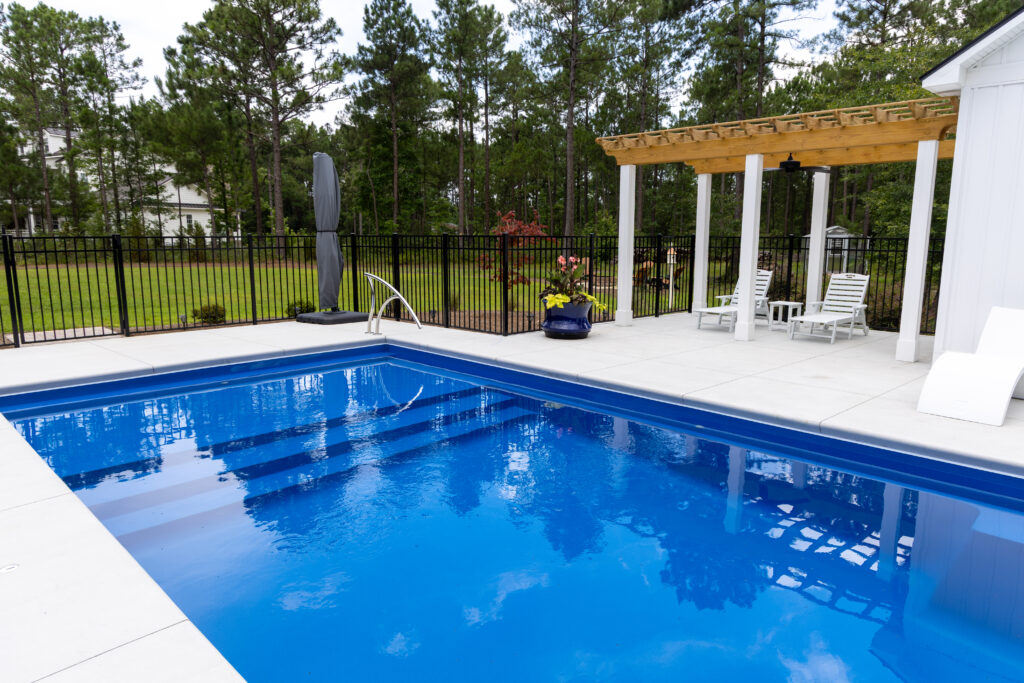
- A barrier at least 48 inches high surrounding the pool area
- Self-closing and self-latching gates
- No gaps large enough for a small child to squeeze through
- Specific requirements for pool covers, alarms, and door alarms if the home itself serves as part of the barrier
These requirements exist because drowning remains one of the leading causes of accidental death for young children. Meeting barrier requirements isn’t just about passing inspection. It’s about protecting your family and neighbors.
How do you get a pool permit in North Carolina?
While the exact process varies by city and county, the general steps include:
- Submit a permit application to your local building department, along with detailed plans of your pool design, including dimensions, materials, and equipment specifications.
- Pay applicable permit fees, which vary based on pool size, type, and location.
- Schedule inspections at various stages of construction, typically including an initial site inspection, a plumbing and electrical inspection, and a final inspection before the pool can be filled and used.
- Receive final approval, confirming your pool meets all safety and structural requirements.
Choose a licensed and insured contractor if you want this process handled correctly the first time. Permitting mistakes can lead to failed inspections, costly rework, or delays that push your pool-ready summer into next year.
Why work with a licensed pool contractor for permitting?
Permitting can be confusing, especially if you’re unfamiliar with local building codes. Working with a licensed and insured pool contractor near you, like Ocean Blue Pools & Spas, takes the guesswork out of the process. Here’s what to look for when choosing a pool builder.
Choose a contractor who manages permitting directly if you want to avoid delays, costly mistakes, or code violations that could affect your home’s resale value. Choose to navigate permitting alone if you’re confident in researching zoning laws, submitting detailed plans, and scheduling multiple inspections yourself. For most homeowners, especially first-time pool owners, partnering with an experienced local contractor makes the entire process far less stressful.
At Ocean Blue Pools & Spas, our process includes managing the permitting and inspection requirements for every in-ground pool installation we complete in the Wilmington area. We know the local codes, we know the inspectors, and we know how to keep your project moving forward without unnecessary delays.
What happens if you install a pool without a permit?
Skipping the permit process might seem like a shortcut, but it often leads to bigger headaches. Homeowners who install pools without proper permits risk:
- Fines and penalties from local building departments
- Forced removal of the pool if it doesn’t meet code requirements
- Insurance complications, since unpermitted structures may not be covered in the event of damage or injury
- Resale issues, as unpermitted pools can complicate the sale of your home down the road
Permits may feel like an extra step, but they ultimately protect your investment and your family’s safety.
Build your dream pool the right way
A new pool should bring years of relaxation and fun, not legal headaches or safety risks. Understanding the permitting process is the first step toward building a pool that’s both beautiful and built to last.
At Ocean Blue Pools & Spas, we’ve spent years helping Wilmington homeowners navigate pool installation from start to finish, including every permit and inspection along the way. Whether you’re dreaming of a custom fiberglass pool from Leisure Pools, Tallman Pools, Aviva Pools, or Thursday Pools, or you’re ready to pair it with a relaxing spa from Bullfrog, our team is here to make the process simple.
Ready to get started? Contact us today for a consultation, and let’s bring your backyard vision to life, the right way.
Frequently asked questions
How long does it take to get a pool permit in North Carolina?
Timelines vary by municipality, but homeowners can typically expect the permitting process to take anywhere from a few weeks to a couple of months, depending on the complexity of the project and the current workload of the local building department.
How much does a pool permit cost in North Carolina?
Permit fees vary depending on your location and the size and type of pool being installed. Contact your local building department or a licensed pool contractor near you for an accurate estimate based on your specific project.
Can I install a pool myself without hiring a contractor?
Yes, homeowners can apply for permits and manage their own pool installation. However, without experience navigating local codes and inspections, this process can become time-consuming and prone to costly mistakes.
Do I need a permit to renovate an existing pool in North Carolina?
In many cases, yes. Pool renovations in North Carolina that involve structural changes, electrical upgrades, or equipment replacement typically require a permit. Minor cosmetic updates may not, but it’s best to confirm with your local building department.
Does Ocean Blue Pools & Spas handle the permitting process for customers?
Yes. Ocean Blue Pools & Spas manages permitting and inspections for every in-ground pool installation project in the Wilmington area, so homeowners can enjoy a smooth, stress-free building experience.