
The best pool landscaping and hardscaping in Wilmington, NC comes down to four choices: a light, slip-resistant deck that stays cool, drainage built for sandy soil, hardware that resists salt air, and native plants that shrug off salt spray. Get those right, and your pool area looks sharp for decades. Get them wrong and you spend every spring pressure-washing pavers, replacing rusted fence posts, and pulling dead shrubs.
Coastal Southeastern North Carolina is hard on outdoor spaces. NC State Extension lists sandy soil, heat, drought, frequent storms, soil salinity, strong wind, and salt aerosol as the core coastal landscaping challenges. Your pool sits in the middle of all of them, so what surrounds it matters as much as the shell itself.
This guide covers what actually holds up near the Cape Fear coast, from Wrightsville Beach to Leland and Hampstead.
Why Does Coastal Wilmington Need a Different Approach to Pool Hardscaping?
Coastal backyards face three forces that inland yards mostly avoid: salt, sand, and storms.
- Salt air corrodes standard steel, dulls some finishes, and burns tender leaves. University of Florida Extension advises that plants within about one-eighth of a mile of saltwater should be at least somewhat salt tolerant.
- Sandy soil drains fast but shifts under load. Rigid slabs poured on poorly compacted sand tend to crack as the base settles.
- Storms bring heavy rain and wind-blown debris every hurricane season. Loose gravel, bark mulch, and lightweight decor end up in the water.
Most homeowners searching for inground pools near me start with the pool shape. Plan the surroundings at the same time. Deck grades, drains, and planting beds are easiest to set while the site is already excavated.
Which Pool Deck Materials Work Best Near the Coast?
The right deck material for coastal Wilmington stays cool underfoot, grips when wet, and tolerates movement in sandy soil. Here is how the main options compare.
Travertine Pavers
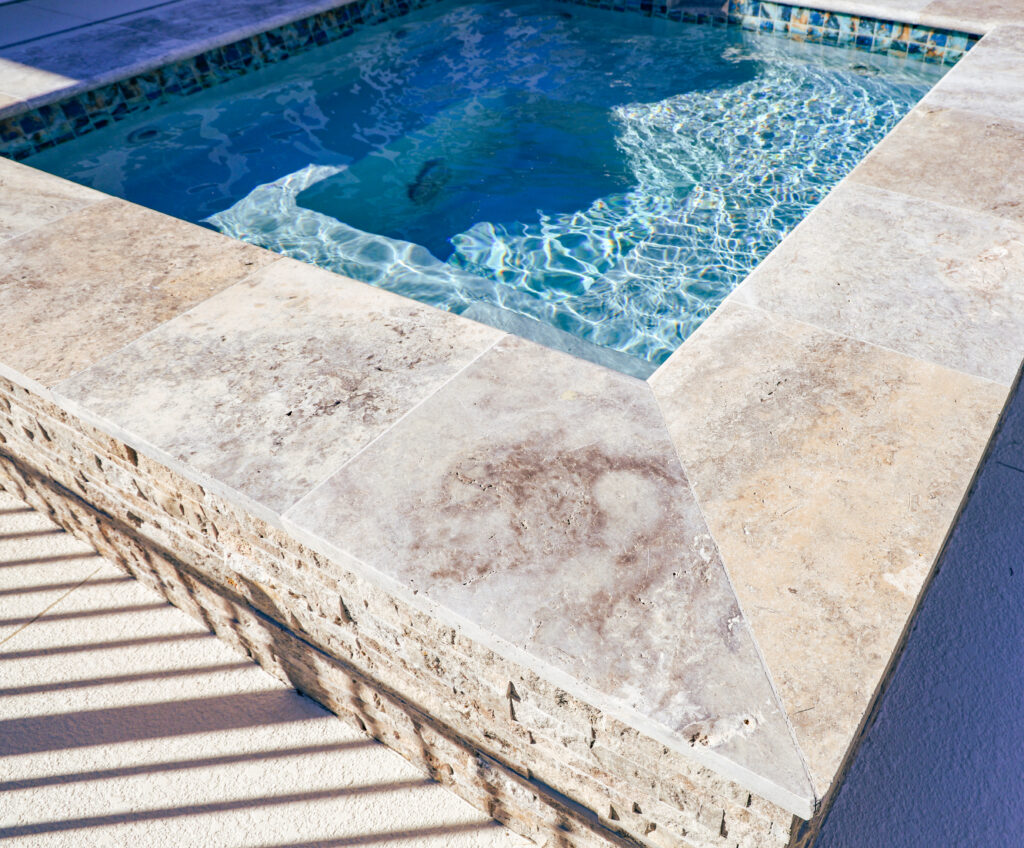
Travertine is a porous natural stone that stays noticeably cooler than concrete in direct sun. Tumbled travertine has a natural texture that resists slipping. Choose light ivory or cream tones and seal it every few years to protect against salt and algae staining.
Concrete Pavers
Interlocking pool deck pavers flex with sandy ground instead of cracking. A damaged paver can be lifted and replaced without breaking up the whole deck. Permeable paver systems also let rainwater soak through the joints, which reduces runoff during summer downpours.
Poured or Stamped Concrete
Poured concrete has the lowest upfront cost, but it is the least forgiving on shifting coastal soil. Dark stamped colors also absorb heat fast. If you go this route, insist on proper control joints, a textured finish, and a light color.
Composite Decking
Composite boards suit raised decks and sloped lots where pavers are impractical. Pair them with stainless steel fasteners, since standard screws rust quickly in salt air.
A simple test for any material: if you cannot stand on it barefoot at 3 p.m. in July, it is the wrong color.
How Should Drainage Be Planned Around a Fiberglass Pool?
Good drainage moves water away from the pool, the house, and the backfill around the shell. The deck should slope gently away from the pool edge so rain never runs back into the water. Channel drains at low points and downspouts routed away from the pool area keep sand and mulch out of your filter.
Fiberglass shells sit on a compacted gravel or sand base, so keeping surface water from saturating that backfill protects the pool long term. When you compare builders for pool installation near me, ask each one how they handle grading and drainage before any deck goes down. A vague answer is a warning sign.
What Are the Best Salt-Tolerant Plants for Pool Landscaping in Wilmington?
Native coastal plants are the safest choice because they evolved with salt spray, sandy soil, and summer heat. These salt-tolerant pool plants perform well around Wilmington pools:
- Wax myrtle: An evergreen shrub reaching 15 to 20 feet that tolerates wind and salt spray. It makes an excellent privacy screen along a property line.
- Yaupon holly: A dense native evergreen that takes pruning well. Dwarf forms work as low borders near walkways.
- Muhly grass: A clumping ornamental grass with pink fall plumes and very little leaf drop.
- Little bluestem: A native bunchgrass with deep roots that helps control erosion on slopes.
- Gaillardia (blanket flower): Red and gold blooms that keep going through the hottest months.
- American beautyberry: Highly salt tolerant with bright purple berries. Plant it a few feet back from the deck, since fallen berries can stain pavers.
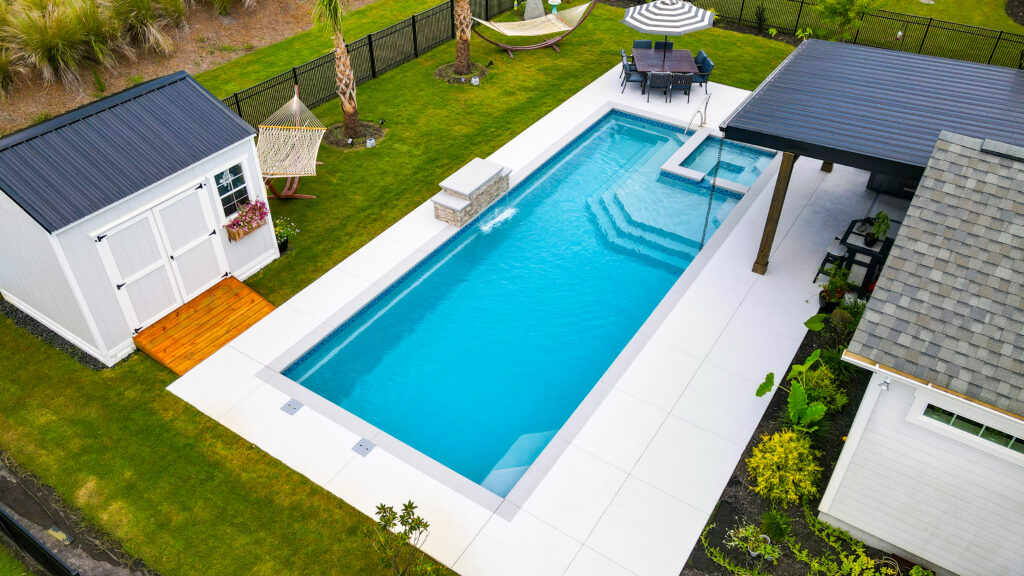
Keep trees that shed heavily, such as pines and sweetgums, well away from the water. Their needles, pollen, and spiky seed balls clog skimmers fast. Remember that even salt-tolerant plants need regular fresh water while they establish.
Which Hardscape Features Add the Most Value?
The features that add the most everyday value are the ones you use every week, not the ones that look good in a rendering.
- Seating walls and raised planters give guests a place to sit and protect planting beds from wind and runoff.
- Shade structures like aluminum pergolas, anchored on proper footings, handle coastal wind better than fabric sails.
- Low-voltage LED lighting with sealed fixtures improves safety on steps and paths after dark.
- Powder-coated aluminum fencing with stainless steel hinges and latches outlasts painted steel in salt air.
- An integrated spa placed on the same hardscape plan creates one connected living area. Planning your pool and spa installation together avoids tearing up new pavers later.
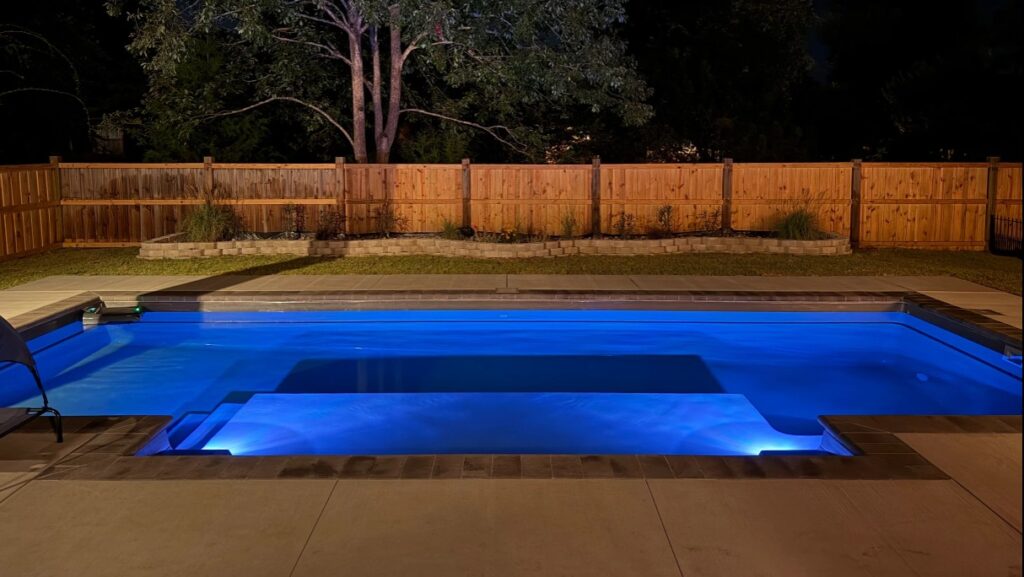
For more layout inspiration, browse these backyard transformation ideas from local projects.
How Do You Match the Pool Shape to Your Landscape Plan?
Your pool shape should set the lines of everything around it. Curved freeform fiberglass pools pair naturally with flowing planting beds and irregular stone edges. Rectangular pools suit crisp paver grids and modern coastal pool design.
Small lots need a different strategy. A compact fiberglass plunge pool leaves room for planting beds and a lounge area. If you want built-in seating inside the water, Lagoon fiberglass pools include benches that reduce the need for extra deck furniture.
Who Can Plan Your Coastal Pool Project in Wilmington?
Ocean Blue Pools and Spas is a family-owned fiberglass pool builder on Market Street in Wilmington, whose family has called the area home since 2009 and serves all of Southeastern North Carolina. The team designs the pool, deck, and planting zones as one plan, so materials, grades, and drainage work together from day one. Most fiberglass installations take about 3 to 6 weeks.
Call (910) 799-3022 or visit the showroom at 7239 Market St. to start planning a pool area built for the coast.
FAQs
How much deck space do I need around an inground pool?
Plan for at least 4 feet of walkable deck around the full perimeter. Add 8 to 10 feet on the side where you want lounge chairs, dining, or a grill.
What is the coolest pool deck material for Wilmington summers?
Light-colored travertine is usually the coolest option underfoot. Light concrete pavers are a close second and cost less. Avoid dark stamped concrete near the water.
Do I need salt-tolerant plants if I do not live on the beach?
If your home is within about one-eighth of a mile of saltwater, yes. Farther inland, coastal natives still make sense because they handle Wilmington heat, drought, and sandy soil with less watering.
Should landscaping be planned before or after pool installation?
Plan it before. Deck slopes, drains, electrical runs for lighting, and planting beds are easiest and cheapest to set while the site is open during excavation.
Can one company handle the pool, hardscaping, and landscaping?
Yes. Ocean Blue Pools and Spas designs fiberglass pools with custom hardscaping as one project and coordinates planting through trusted local landscapers, so you deal with one team from design to first swim.