
A licensed and insured pool contractor near me in North Carolina should pass four tests: an active state license from the NC Licensing Board for General Contractors (NCLBGC) for any project of $40,000 or more, current liability and workers’ compensation coverage, a building permit pulled in the contractor’s own name, and a licensed electrician for all pool wiring. If a builder fails any one of these, walk away before you hand over a deposit.
This matters more than most homeowners realize. Ocean Blue’s own figures put a typical inground fiberglass pool at $45,000 to $85,000, which means nearly every inground pool in the state crosses the licensing threshold. Here is exactly how to check a builder before any money changes hands.
Does a Pool Contractor Need a License in North Carolina?
Yes. Under N.C. Gen. Stat. § 87-1, anyone who builds or manages a construction project costing $40,000 or more must hold a license from the NCLBGC. That threshold took effect on October 1, 2023.
The board licenses pool builders through a Specialty classification for swimming pools, and the broader Residential and Building classifications also cover pool work. Every license also carries a limitation tier that caps how large a single project can be. A Limited license covers projects up to $750,000, an Intermediate license covers projects up to $1.5 million, and an Unlimited license has no cap.
For a homeowner, the takeaway is simple. Any legitimate pool builder North Carolina families hire for an in-ground project should hand over a license number without hesitation. If a salesperson dodges the question, changes the subject, or says the license is “being renewed,” treat that as your answer.
How Do You Verify a Pool Contractor’s License in NC?
Verifying a license takes about five minutes online, and you should do it for every bid you receive.
- Ask for the company’s exact legal name and NCLBGC license number in writing.
- Run an NCLBGC license lookup using the free License Search on nclbgc.org.
- Confirm the license is active and carries a swimming pool, residential, or building classification.
- Check that the limitation tier covers your total contract value.
- Make sure the name on the license matches the name on your contract.
That last step catches more problems than people expect. When the license belongs to one company and the contract comes from another, the license is often being borrowed, and you may have no real recourse if something goes wrong.
Do not stop at the general contractor. Your pump, lighting, automation, and the equipotential bonding that keeps swimmers safe all involve electrical work. In North Carolina, that work must be done by a contractor licensed with the NC State Board of Examiners of Electrical Contractors, which offers its own free online lookup. Ask your pool builder which electrician they use and check that license too.
What Insurance Should a Pool Contractor Carry?
A properly insured pool contractor carries general liability and workers’ compensation at a minimum. Excavators, dump trucks, and cranes on your property create real risk, and pool contractor insurance is what keeps that risk off your homeowner’s policy.
General liability covers damage to your property during the job. That includes a driveway cracked by a loaded truck, irrigation lines torn up during excavation, or a septic system damaged by heavy equipment.
Workers’ compensation covers injuries to the crew. North Carolina requires it for most employers with three or more employees. If an uninsured worker gets hurt in your backyard, the claim can land on you. Commercial auto coverage also matters, since delivery trucks and equipment will cross your lawn and driveway.
Ask for a certificate of insurance sent directly from the contractor’s insurance agent, not a photocopy pulled from a folder. Check that the policy dates cover your entire project, and ask to be listed as the certificate holder. If a separate crane company will set your fiberglass shell, confirm that company carries its own coverage as well.
Who Pulls the Permits for Inground Pool Installation in North Carolina?
Your contractor should pull the building permit in the company’s name with your county, whether that is New Hanover, Brunswick, or Pender. The permit is what triggers inspections at key stages of inground pool installation that North Carolina homeowners rely on for safety, including excavation, electrical bonding, and the final inspection before the pool can be used.
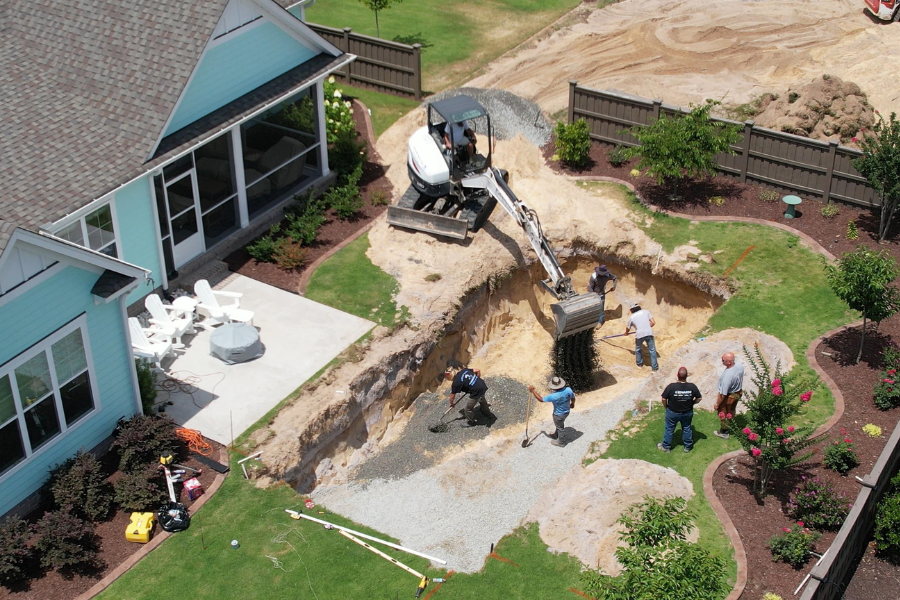
If a builder asks you to pull an owner-builder permit instead, treat it as a serious red flag. That move shifts code responsibility and liability onto you as the homeowner.
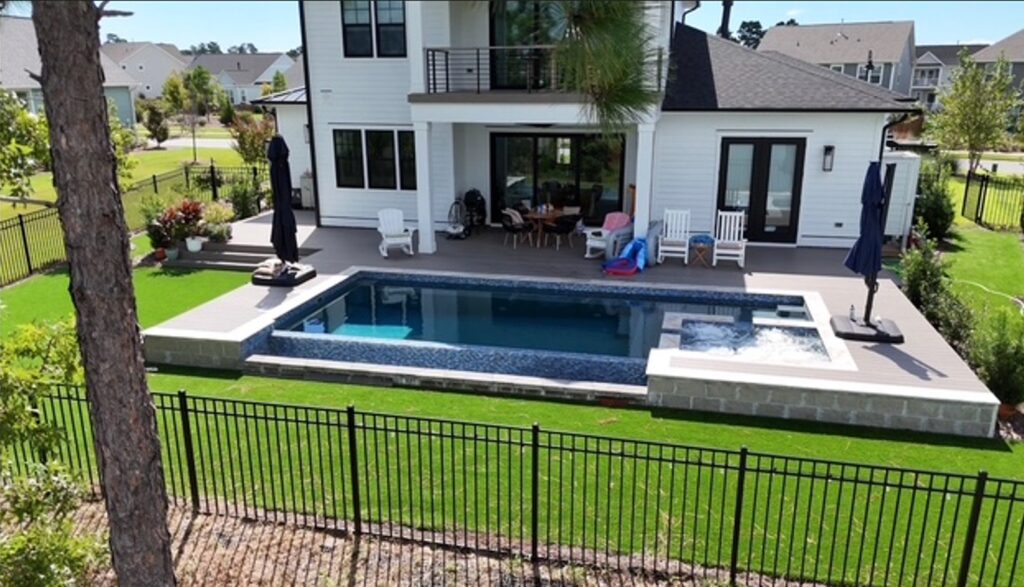
One of the most important inspections covers the pool barrier. The NC Residential Code requires a barrier at least 48 inches above grade on the outside, with openings that will not pass a 4-inch sphere and gates that are self-closing and self-latching. A pool that fails the barrier inspection cannot be put into use, so your contractor should plan fencing into the project from the start rather than treating it as an afterthought.
What Are the Red Flags When Hiring a Pool Builder?
Most pool contracting disputes trace back to warning signs that were visible before anyone signed. The most common is a large deposit, especially in cash, demanded upfront before a permit has even been issued. A reputable builder ties payments to completed milestones, so your money follows real progress in your backyard.
Paperwork is the next tell. A legitimate contract spells out the pool model, equipment, scope of work, payment schedule, and timeline. If the license number is missing, belongs to a different company, or the contractor cannot produce a certificate of insurance within a day or two, you already know how the rest of the project will go.
Watch the sales approach too. Door-to-door pitches, “today only” pricing, and pressure to sign at the kitchen table are tactics that show up most often after storms, when demand spikes and fly-by-night crews move in. Finally, read the warranty carefully. A good builder clearly separates the manufacturer’s structural warranty on the fiberglass shell from its own workmanship warranty on installation, plumbing, and decking. If those two are blurred together, ask why.
What Should You Ask Before Signing a Pool Contract?
The right questions reveal how a builder actually runs a job. Start by asking who will be on site each day and who your single point of contact will be.
Next, ask which shell manufacturer they use and what the warranty covers. Then confirm exactly what the price includes. Excavation, plumbing, electrical, decking, fencing, and pool startup should all be accounted for, because exclusions are where surprise invoices come from. Ask how the payment schedule is tied to completed work, and how they handle lawn repair, haul-off, and cleanup at the end of the project.
A builder who answers clearly and walks you through the full fiberglass pool installation process usually runs organized job sites. For pricing ranges, timelines, and shell lifespan, review these fiberglass pool cost and warranty FAQs before you compare bids side by side.
Why Do Homeowners Choose Ocean Blue Pools and Spas?
Ocean Blue Pools and Spas is a family-owned, licensed pool contractor based on Market Street in Wilmington, with a Certified Pool Operator on staff. The owner and crew are on site from the first visit to the first swim, so there are no surprises in the middle of your project.
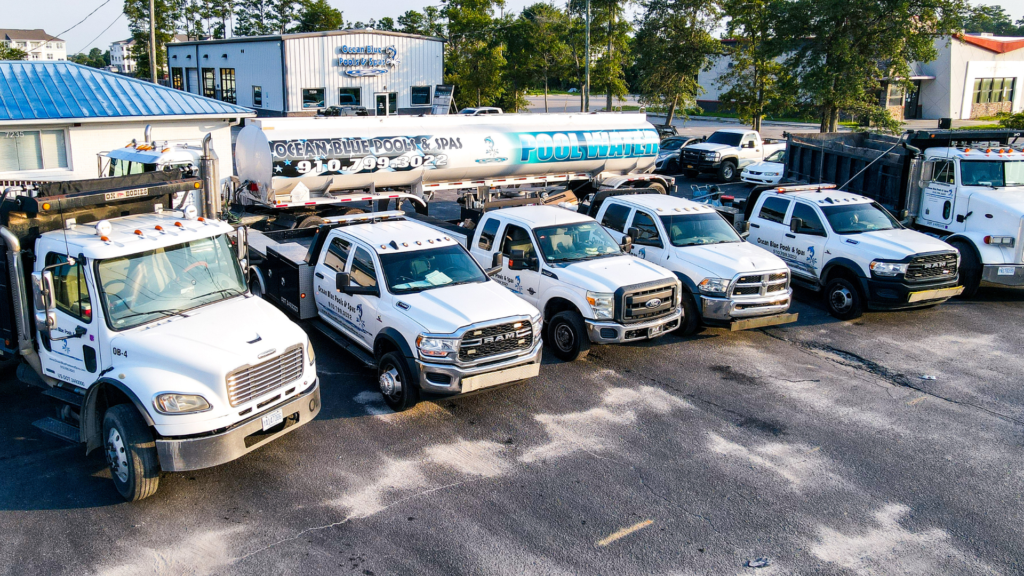
The team installs custom fiberglass pools along with classic designs like Roman fiberglass pools, and serves Wilmington, Leland, Southport, Hampstead, and other communities across Southeastern NC.
Put us through the same checklist you would use on anyone else. Call (910) 799-3022 to request our license and insurance details and schedule a free consultation with a pool builder North Carolina homeowners trust.
FAQs
At what project cost does a pool contractor need a license in North Carolina?
A pool contractor needs an NCLBGC license for any project costing $40,000 or more. Since most in-ground pools cost more than that, nearly every in-ground project requires a licensed builder.
How do I look up a pool contractor’s license in NC?
Use the free License Search on the NC Licensing Board for General Contractors website. Search by company name or license number, then confirm the status, classification, and limitation tier.
Can a landscaper or handyman install an in-ground pool?
Only if they hold the right NCLBGC classification for projects of $40,000 or more. A landscaping license alone does not authorize them to act as your pool contractor.
What happens if I hire an unlicensed pool contractor?
You take on the risk. You may face insurance gaps, permit problems, and failed inspections, and you lose the protections that come with hiring a board-regulated contractor if the job goes wrong.
How long does in-ground pool installation take in North Carolina?
A standard fiberglass pool typically takes about 3 to 6 weeks to install once permits are approved. Site access, weather, and decking scope can extend that timeline.